

Brushing twice a day, flossing and visiting the dentist remain the foundation of good oral health. But lately, another part of dental wellness has been getting much more attention: the microorganisms that naturally live inside your mouth.
That is where the Oral Probiotic conversation begins.
Your mouth is home to a complex community of bacteria and other microorganisms. Some are associated with a healthy oral environment, while an imbalance in that ecosystem may contribute to problems such as unpleasant breath, plaque accumulation and gum discomfort.
Because of this, many people are now looking beyond conventional toothpaste and mouthwash and asking whether an Oral Probiotic or oral-health supplement could complement their everyday dental routine.
The idea is simple: instead of approaching oral hygiene exclusively by trying to eliminate bacteria, certain supplements are designed to support a more balanced environment inside the mouth.
But there is a problem.
Search for oral probiotics online and you will find dozens of products making very similar promises. Some contain probiotic strains. Others combine probiotics with plant extracts, minerals, vitamins or ingredients such as xylitol. And some formulas marketed for oral wellness are not probiotics in the strict scientific sense at all.
So how do you know what you are actually buying?
In this guide, we’ll explain what an Oral Probiotic is, how oral probiotics differ from conventional digestive probiotics, what you should consider before choosing one, and how several popular oral-health formulas compare.
We’ll also take a closer look at six supplements currently marketed for oral wellness:
ProDentim, DentaBiome, ProvaDent, Dentolyn, BioDentex and DentalPrime.
The objective isn’t to tell you that one bottle can magically fix every dental problem. It can’t.
Instead, this guide is designed to help you understand the formulas so you can make a more informed decision about which type of oral-health supplement best fits what you’re looking for.
Important: Dietary supplements are not substitutes for brushing, flossing, professional dental care or treatment for dental disease. Persistent bleeding gums, tooth pain, loose teeth, swelling or persistent bad breath should be evaluated by a dentist or healthcare professional.
What Is an Oral Probiotic?
An Oral Probiotic is generally a supplement containing beneficial microorganisms intended to support the microbial environment of the mouth.
Most people are familiar with probiotics because of their association with digestive health. Yogurt, fermented foods and probiotic capsules are commonly marketed to support intestinal bacteria.
The mouth, however, has its own microbiome.
Hundreds of microbial species may inhabit areas such as the tongue, teeth, gums, cheeks and saliva. These organisms interact constantly with one another and with the foods and drinks we consume.
This means oral wellness isn’t simply about having “bacteria” or “no bacteria.”
It is about balance.
Certain oral probiotic products therefore attempt to introduce beneficial bacterial strains or provide ingredients designed to support an environment in which desirable microorganisms can thrive.
This is one reason the Oral Probiotic category has attracted considerable interest among consumers looking for additional ways to support fresh breath, teeth and gums.
The Oral Microbiome: Why It Matters
Think about your mouth as an ecosystem rather than a sterile environment.
Every meal, drink and oral-care product can temporarily change that environment.
Saliva plays an important role. So do pH, diet, hydration, smoking, medications, oral hygiene and other factors.
When bacteria metabolize certain food components, they can produce compounds and acids. Dental plaque itself is a structured microbial biofilm rather than simply “dirt” sitting on your teeth.
That is why modern discussions about oral wellness increasingly include the oral microbiome.
An Oral Probiotic is not intended to replace mechanical cleaning. You still need to physically remove plaque by brushing and cleaning between the teeth.
Instead, probiotics represent a different approach: supporting microbial balance alongside conventional oral hygiene.
How Do Oral Probiotics Work?
The exact mechanism depends on the probiotic strains and formula involved.
Researchers have investigated several possible ways beneficial microorganisms could influence oral ecology, including competition with other microorganisms for adhesion sites and nutrients and the production of substances that influence microbial interactions.
However, results vary according to the bacterial strain, dose, delivery method and oral condition being studied.
That last point is important.
Not every probiotic is automatically an oral probiotic.
Different probiotic strains can behave differently, which is why the actual formulation matters more than simply seeing the word “probiotic” printed on the label.
An Oral Probiotic should therefore be evaluated by looking at the microorganisms and supporting ingredients contained in the formula rather than relying exclusively on marketing language.
Oral Probiotic vs. Regular Probiotic: What’s the Difference?
Traditional probiotic supplements are usually formulated primarily with digestive health in mind.
An Oral Probiotic, by contrast, is designed around the mouth and oral microbiome.
Delivery can also matter.
Some oral supplements use chewable tablets or lozenges because these formats allow ingredients to remain in contact with the mouth before being swallowed.
Other oral-health supplements use capsules or tablets and combine probiotics with additional nutrients.
Neither format automatically makes a product better. The important question is whether the formula makes sense for your intended use.
Can an Oral Probiotic Help With Bad Breath?
This is one of the most common reasons people search for oral probiotics.
Bad breath — clinically known as halitosis — can have many possible causes.
They include food, poor oral hygiene, tongue coating, dry mouth, smoking and certain dental or medical conditions. Some microorganisms in the mouth can also produce volatile sulfur compounds associated with unpleasant breath.
Because oral bacteria can be involved, researchers have investigated probiotics as one possible strategy for managing oral microbial balance.
An Oral Probiotic for bad breath, however, shouldn’t be treated as a substitute for identifying the cause.
If bad breath persists despite good brushing, tongue cleaning, flossing and hydration, a dental examination is worthwhile.
A probiotic may be a complementary part of a routine, but persistent halitosis deserves proper evaluation.
Can Oral Probiotics Support Healthy Gums?
The gums are another major reason consumers become interested in oral microbiome products.
Healthy gums should generally not bleed regularly during normal brushing or flossing. Persistent redness, swelling, tenderness or bleeding can be signs that professional dental attention is needed.
Research into probiotics and periodontal health is ongoing, and certain probiotic strains have been investigated as adjuncts to conventional oral care.
The key word is adjunct.
An Oral Probiotic should complement proper plaque control and professional care rather than replace them.
This distinction is especially important for anyone already experiencing signs of gum disease.
What Should You Look for in an Oral Probiotic?
There isn’t one universal formula that is appropriate for everyone.
A better way to compare products is to look at several characteristics together.
First, check whether the supplement actually contains identifiable probiotic microorganisms if probiotics are specifically what you want.
Second, consider additional ingredients. Some oral formulas combine microorganisms with xylitol, plant compounds, minerals and vitamins.
Third, consider the delivery method and whether it fits your routine.
Fourth, evaluate transparency. A trustworthy supplement page should make it reasonably easy to understand what is inside the formula, how it should be used and what the company’s guarantee or return policy actually covers.
Finally, don’t confuse a larger ingredient list with a better product. A simpler formula that matches your objective may make more sense than a long formula containing ingredients you don’t need.
With that in mind, let’s examine the products.
1. ProDentim – Oral Probiotic Formula With Multiple Beneficial Strains
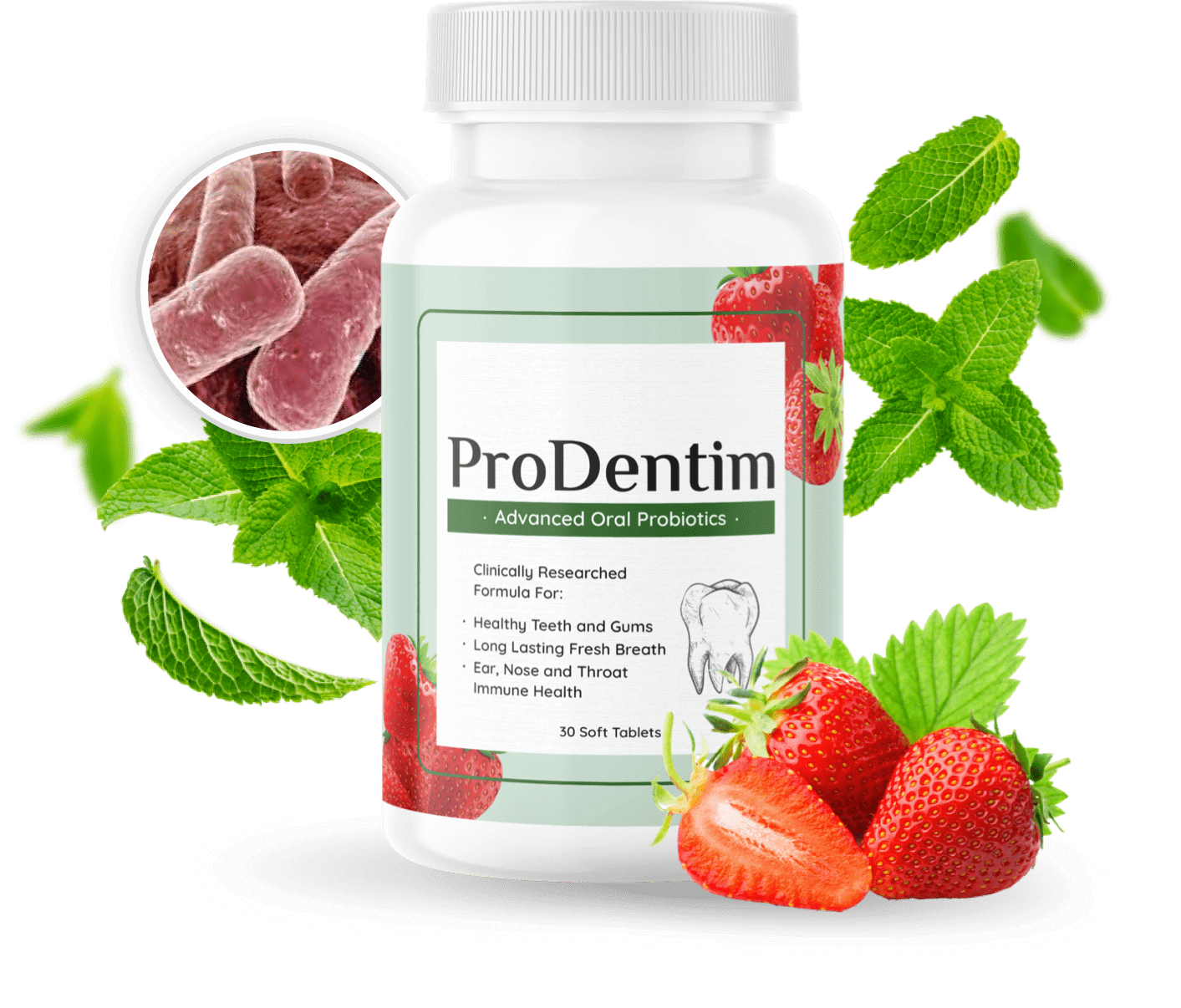
Best suited for: People specifically interested in a probiotic-centered oral-health formula.
ProDentim is one of the better-known products in the oral microbiome supplement category.
Rather than approaching dental wellness solely through vitamins and minerals, the formula is promoted around beneficial microorganisms and ingredients intended to complement oral health.
Among the ingredients highlighted by the manufacturer are probiotic strains including Lactobacillus paracasei and Bifidobacterium lactis BL-04, along with other components in its oral-health blend.
This makes ProDentim particularly relevant to someone whose primary search is specifically for an Oral Probiotic rather than simply a general vitamin for teeth.
Why ProDentim Stands Out
The main attraction is the microbiome-oriented concept.
Consumers searching for probiotics usually want more than calcium or vitamin D. They are specifically interested in introducing beneficial microorganisms into their oral routine.
ProDentim’s formulation is built around that idea.
The manufacturer also promotes the product as part of a daily routine for supporting teeth and gums.
Who Might Consider ProDentim?
ProDentim may appeal to adults who already brush and floss regularly but want to explore a microbiome-focused addition to their routine.
It may also appeal to people who have been reading about the relationship between oral bacteria and fresh breath.
However, anyone with persistent dental symptoms should still speak with a dental professional rather than relying on supplementation alone.
→ Visit the Official ProDentim Website to View Current Formula, Pricing and Availability
2. DentaBiome – Probiotic and Postbiotic Oral Support
Best suited for: People interested in a formula built around both probiotic and postbiotic concepts.
DentaBiome takes a somewhat broader approach to oral wellness.
According to the product information provided by the manufacturer, its formulation incorporates ingredients associated with probiotic and postbiotic support alongside botanical components.
The formula highlights ingredients such as Lactobacillus plantarum, Lactobacillus salivarius, Lactobacillus paracasei, and additional components including cranberry.
That combination makes DentaBiome another interesting option for readers specifically comparing Oral Probiotic formulas.
Probiotics vs. Postbiotics
This distinction can be confusing.
Probiotics generally refer to live microorganisms that, when administered in adequate amounts, may provide a health benefit.
Postbiotics refer to preparations of inanimate microorganisms and/or their components that may confer health benefits.
DentaBiome’s marketing emphasizes a broader microbiome approach rather than relying on a single nutrient.
Why Someone Might Choose This Type of Formula
Someone interested in microbial diversity may prefer a multi-ingredient formula instead of a conventional mineral-based dental supplement.
As always, though, more ingredients do not guarantee better results.
What matters is whether the formulation fits your goals and whether you tolerate the ingredients well.
→ Visit the Official DentaBiome Website to Check Current Ingredients and Offers
3. ProvaDent – Oral Wellness Formula With Xylitol and Probiotic Ingredients
Best suited for: People looking for a broad oral-health supplement that combines microbiome support with complementary ingredients.
ProvaDent approaches oral health through a blend of ingredients rather than relying on only one component.
The manufacturer’s product information highlights ingredients including organic xylitol, a proprietary botanical complex, cranberry extract, purple carrot powder and a blend of probiotic organisms.
Xylitol is particularly familiar in oral-care products because it is frequently found in sugar-free chewing gum, mints and dental products.
The presence of probiotics alongside these supporting ingredients makes ProvaDent relevant to the Oral Probiotic category while giving it a broader formulation.
What Makes ProvaDent Different?
Its appeal is the combination.
Rather than offering probiotics alone, ProvaDent brings several types of ingredients together into one oral-wellness formula.
That may be attractive to someone who doesn’t want to purchase multiple separate supplements.
The manufacturer markets ProvaDent as part of a routine intended to support oral health, fresh breath and a balanced oral environment.
These should be understood as supportive goals rather than promises to treat cavities, gum disease or other dental conditions.
ProvaDent Pricing and Guarantee
The sales material provided for ProvaDent displays multiple package sizes, with larger packages reducing the advertised per-bottle price. It also advertises a 60-day money-back guarantee.
Pricing and promotions can change, so check the official website before ordering.
→ Visit the Official ProvaDent Website for Current Pricing, Bonuses and Availability
4. Dentolyn – Oral and Gut Biome Support With Vitamins and Minerals

Best suited for: Readers looking for a broader nutritional formula rather than a traditional probiotic-only product.
Dentolyn is slightly different from some of the other products on this list.
Its formula, according to the manufacturer’s page, includes ingredients such as vitamin C, vitamin B6, iodine, xylitol, chlorella powder, clinoptilolite zeolite powder and magnesium stearate.
The product is promoted around supporting healthy gums and teeth while also maintaining oral and gut biome balance and fresh breath.
Is Dentolyn Really an Oral Probiotic?
This is an important distinction for consumers.
If your definition of an Oral Probiotic is specifically a supplement containing live beneficial bacterial strains, you should carefully compare Dentolyn’s current Supplement Facts panel with probiotic-centered formulas before purchasing.
Dentolyn is better understood as a broader oral-wellness supplement based on the ingredients displayed in the supplied product information.
That doesn’t automatically make it inferior or superior. It simply makes it different.
Some shoppers want probiotics specifically. Others are searching for a broader combination of vitamins, minerals and oral-support ingredients.
Ingredients Worth Noticing
Vitamin C is an essential nutrient involved in normal collagen formation, while vitamin B6 participates in numerous normal metabolic processes.
Xylitol is also widely used in oral-care products.
The important point is to choose the product according to the type of supplementation you’re actually looking for rather than assuming every dental supplement has the same formulation.
→ Visit the Official Dentolyn Website to Review the Complete Supplement Facts
5. BioDentex – Botanical-Focused Oral Health Support
Best suited for: Consumers interested in a plant-focused oral supplement.
BioDentex takes another approach to oral wellness.
The manufacturer presents the formula as a blend designed around oral support and highlights multiple plant-derived ingredients.
Its sales materials feature botanical components including coconut-derived ingredients, olive-related botanical ingredients, cranberry, peppermint and pomegranate, among other components shown in the formula presentation.
This creates a noticeably different profile from a conventional Oral Probiotic centered primarily on bacterial strains.
Why Include BioDentex in an Oral Probiotic Guide?
Because people searching for oral probiotics frequently encounter BioDentex while researching oral-health supplements.
Rather than pretending all these products are identical, it is more useful to explain the difference.
If your priority is specifically probiotic strains, inspect BioDentex’s current ingredient panel carefully and compare it directly with formulas such as ProDentim or DentaBiome.
If you’re more interested in botanical oral-health support, BioDentex may be closer to what you’re seeking.
Additional Product Features
The manufacturer’s sales page also advertises package-dependent bonuses and a money-back guarantee for qualifying purchases.
As with all supplement promotions, prices, bonuses, shipping conditions and guarantee terms can change.
Check the official website for the current conditions before purchasing.
→ Visit the Official BioDentex Website for the Current Formula and Package Options
6. DentalPrime – Vitamin and Mineral-Based Dental Wellness Formula
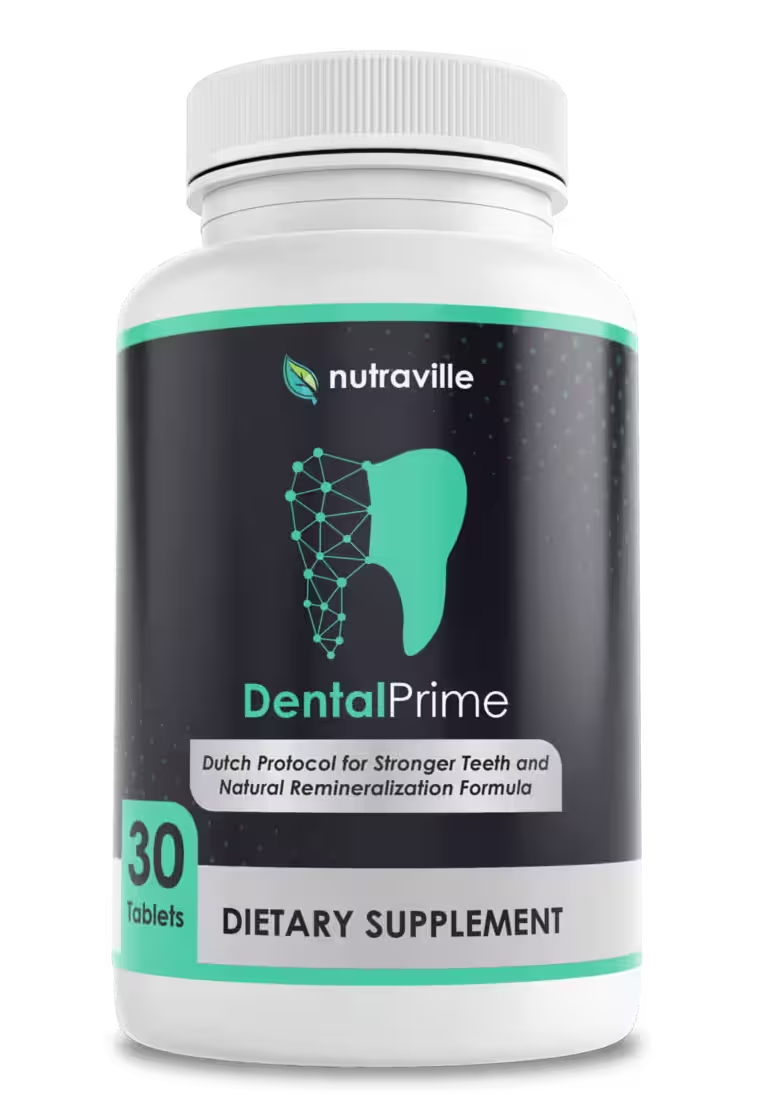
Best suited for: People interested in nutritional support for teeth and gums rather than probiotics alone.
DentalPrime is another product that deserves clarification.
Its formula highlights nutrients including vitamin D3, vitamin K, calcium, xylitol, cranberry powder and zinc, according to the manufacturer’s product page.
These ingredients put DentalPrime closer to a nutritional oral-health formula than a classic Oral Probiotic supplement.
Why Are Vitamin D, Vitamin K and Calcium Relevant?
Calcium is required for the maintenance of normal bones and teeth, while vitamin D contributes to normal calcium absorption and normal maintenance of bones and teeth.
Vitamin K also participates in normal physiological processes involving proteins in the body.
This gives DentalPrime a different nutritional strategy from probiotic-focused formulas.
Who Might Prefer DentalPrime?
Someone whose primary interest is vitamins and minerals related to dental wellness may find this type of formula more relevant.
Someone whose main objective is introducing specific beneficial bacterial strains into the mouth may prefer to compare it against a more directly probiotic-focused option.
The distinction matters because the term “oral health supplement” covers many different types of products.
→ Visit the Official DentalPrime Website to Review Current Ingredients and Pricing
Oral Probiotic Comparison: Which Formula Fits Your Goal?
Here is the easiest way to understand the differences.
| Product | Main Formula Approach | Notable Ingredients/Features | May Appeal To |
|---|---|---|---|
| ProDentim | Probiotic-focused oral support | Multiple beneficial bacterial strains | People specifically searching for oral probiotics |
| DentaBiome | Probiotic/postbiotic approach | Multiple microbial strains + supporting ingredients | Those interested in broader microbiome support |
| ProvaDent | Probiotics + complementary ingredients | Xylitol, probiotics, cranberry and botanical ingredients | People wanting an all-in-one oral wellness formula |
| Dentolyn | Vitamins/minerals + oral support | Vitamin C, B6, iodine, xylitol and chlorella | Those preferring broader nutritional support |
| BioDentex | Botanical-focused support | Multiple plant-derived ingredients | People interested in botanical oral wellness |
| DentalPrime | Vitamin/mineral dental support | D3, K, calcium, zinc, xylitol and cranberry | People interested in nutritional support for teeth |
The important takeaway is that these products are not interchangeable.
If you’re searching specifically for an Oral Probiotic, start by comparing the products that clearly emphasize probiotic microorganisms.
If you’re more interested in nutritional or botanical oral support, the other formulas may be more relevant to your goals.
Oral Probiotic for Bad Breath: What Should You Choose?
If fresh breath is your primary concern, first look at the basics.
Do you clean your tongue?
Do you floss or use another method to clean between your teeth?
Are you drinking enough water?
Do you have persistent gum bleeding?
Do you frequently wake up with an extremely dry mouth?
These questions matter because an Oral Probiotic cannot compensate for an untreated underlying cause of halitosis.
For someone with otherwise good oral hygiene who simply wants additional microbiome support, a probiotic-centered product may make sense to investigate.
Products combining probiotics with xylitol may also appeal to people specifically interested in oral-care ingredients.
But if the odor persists, professional evaluation is more important than repeatedly switching supplements.
When Should You Take an Oral Probiotic?
There is no universal schedule for every oral supplement.
Different products contain different ingredients and have different directions.
For that reason, follow the directions printed on the product label or current official website.
Do not automatically assume that instructions for one Oral Probiotic apply to another.
If you take prescription medications, have a medical condition, are pregnant or breastfeeding, or are considering giving a supplement to a child, discuss supplementation with an appropriate healthcare professional first.
How Long Does an Oral Probiotic Take to Work?
This is another question without a universal answer.
Responses to supplements vary considerably between individuals, and oral conditions themselves vary.
Your diet, oral hygiene, saliva production, smoking status, dental health and consistency of use can all influence what you notice.
Be skeptical of any promise that everyone will experience a dramatic transformation within a specific number of days.
A more reasonable approach is to follow the manufacturer’s directions while continuing good oral hygiene and paying attention to your own experience.
Can Oral Probiotics Replace Mouthwash?
No.
They serve different purposes.
Mouthwashes vary widely: some are cosmetic, some contain fluoride, and some therapeutic rinses contain antimicrobial ingredients for specific purposes.
An Oral Probiotic is based on a different concept — supporting microbial balance.
One should not automatically be considered a substitute for the other.
Your dentist can help you determine whether a particular rinse belongs in your daily routine.
Can Oral Probiotics Replace Brushing and Flossing?
Absolutely not.
This is probably the most important point in the entire guide.
Plaque physically adheres to tooth surfaces. Mechanical cleaning is therefore essential.
Brush thoroughly with fluoride toothpaste and clean between your teeth regularly according to professional recommendations.
Think of an Oral Probiotic as a possible addition to oral care — not the foundation of oral care.
Are Oral Probiotics Safe?
Many probiotic products are well tolerated by healthy adults, but “natural” does not automatically mean appropriate for everyone.
Formulas may contain multiple probiotics, herbs, vitamins, minerals, sweeteners or other ingredients.
People with medical conditions, compromised immune systems, allergies or medication concerns should seek professional guidance before starting supplements.
Always examine the complete ingredient list rather than purchasing based only on the front label.
How to Get Better Results From Your Oral-Care Routine
No supplement can outperform poor daily habits.
If you decide to use an Oral Probiotic, build it into a strong oral-care routine rather than expecting the supplement to do everything.
Brush your teeth thoroughly twice daily with fluoride toothpaste. Clean between your teeth with floss or another suitable interdental cleaner. Clean your tongue if coating is a recurring issue. Drink adequate water, especially if your mouth tends to feel dry.
Limit frequent exposure to sugary foods and drinks, particularly sipping sweet beverages throughout the day.
And don’t wait for pain before seeing a dentist.
Many dental problems are easier to manage when discovered early.
Frequently Asked Questions About Oral Probiotics
What is the best Oral Probiotic?
There is no single product that is objectively best for everyone. The right choice depends on whether you’re looking specifically for probiotic strains, a probiotic-plus-botanical blend, or broader vitamin and mineral support.
Compare the actual ingredient panels rather than relying solely on marketing claims.
Is an Oral Probiotic good for your teeth?
Oral probiotics are being studied for their potential role in supporting the oral microbiome. They should be considered complementary to established oral hygiene rather than replacements for fluoride toothpaste, brushing, interdental cleaning or dental care.
What is the difference between dental probiotics and gut probiotics?
The main difference is their intended target.
Gut probiotics are primarily formulated around the gastrointestinal microbiome, whereas dental or oral probiotics are selected and delivered with the oral environment in mind.
Some microorganisms may be used in both categories.
Can I take an Oral Probiotic every day?
Many products are designed for daily use, but you should follow the specific directions of the product you purchase.
Do not exceed the recommended amount simply because a supplement is marketed as natural.
Can oral probiotics help with morning breath?
Morning breath is often associated with reduced saliva flow during sleep and bacterial activity in the mouth.
Improving hydration, tongue cleaning and overall oral hygiene may help. An oral probiotic may be considered as an additional microbiome-focused strategy, but persistent severe bad breath should be evaluated professionally.
Are probiotics good for gums?
Certain probiotic strains have been researched in relation to periodontal and gingival health, but probiotics should not replace periodontal treatment or professional plaque removal when these are needed.
Can I use oral probiotics if my gums bleed?
Regular bleeding deserves attention.
It may be associated with gingival inflammation, brushing technique or other oral conditions. Rather than trying to mask the symptom with a supplement, consider a dental examination.
Should I buy oral probiotics from the official website?
For products sold primarily through direct-to-consumer websites, buying through the manufacturer’s authorized sales channel can make it easier to verify current pricing, package options, guarantee terms and product authenticity.
Always check the seller and terms before entering payment information.
Is xylitol a probiotic?
No.
Xylitol is not a probiotic microorganism.
It is a sugar alcohol commonly used in sugar-free oral-care products. That’s why seeing xylitol on a supplement label does not automatically make that product an Oral Probiotic.
Are all dental supplements oral probiotics?
No, and this is one of the biggest misconceptions in this category.
Some dental supplements contain probiotics. Others primarily contain vitamins, minerals or botanical ingredients.
Always read the formula.
Final Thoughts: Is an Oral Probiotic Worth Considering?
Oral wellness is more complex than simply trying to eliminate every bacterium in your mouth.
The mouth contains a living microbial ecosystem, and scientific interest in the relationship between that ecosystem, teeth, gums and breath continues to grow.
That makes the Oral Probiotic category interesting.
But consumers should also maintain realistic expectations.
A supplement cannot fill a cavity. It cannot remove hardened tartar. It cannot replace periodontal treatment. And it cannot compensate for months or years of inadequate oral hygiene.
Where these products become more interesting is as complementary support.
If your main priority is a probiotic-centered formula, products such as ProDentim, DentaBiome and ProvaDent deserve closer inspection because their marketing and formulations emphasize microbiome-oriented ingredients.
If you are more interested in a broader nutritional or botanical approach, Dentolyn, BioDentex and DentalPrime represent different strategies within the oral-health supplement category.
Don’t choose based solely on the bottle design, the biggest discount or the longest ingredient list.
Ask yourself what you’re actually trying to accomplish.
Are you specifically interested in beneficial bacterial strains? Are you looking for fresh-breath support? Do you prefer a formula combining probiotics with other oral-care ingredients? Or are vitamins and minerals more aligned with what you’re seeking?
Once you answer that question, comparing these products becomes much easier.
And regardless of which Oral Probiotic or oral-health supplement you decide to investigate, keep the fundamentals in place: brush, clean between your teeth, maintain regular dental visits and pay attention to persistent symptoms.
A supplement should support a good routine — never replace one.
Ready to Compare Your Options?
Review the ingredients, directions, current price and guarantee of each formula directly from its official product page before making your decision.
→ CHECK PRODENTIM ON THE OFFICIAL WEBSITE
→ CHECK DENTABIOME ON THE OFFICIAL WEBSITE
→ CHECK PROVADENT ON THE OFFICIAL WEBSITE
→ CHECK DENTOLYN ON THE OFFICIAL WEBSITE
→ CHECK BIODENTEX ON THE OFFICIAL WEBSITE
→ CHECK DENTALPRIME ON THE OFFICIAL WEBSITE
Disclosure: This article may contain affiliate links. If you purchase through one of these links, we may receive a commission at no additional cost to you. This does not affect the information presented in this article.
Medical Disclaimer: The information provided in this article is for educational and informational purposes only and is not intended to diagnose, treat, cure or prevent any disease. Dietary supplements are not substitutes for professional dental or medical care. Consult an appropriate healthcare professional if you have persistent oral-health symptoms or questions about supplementation.